

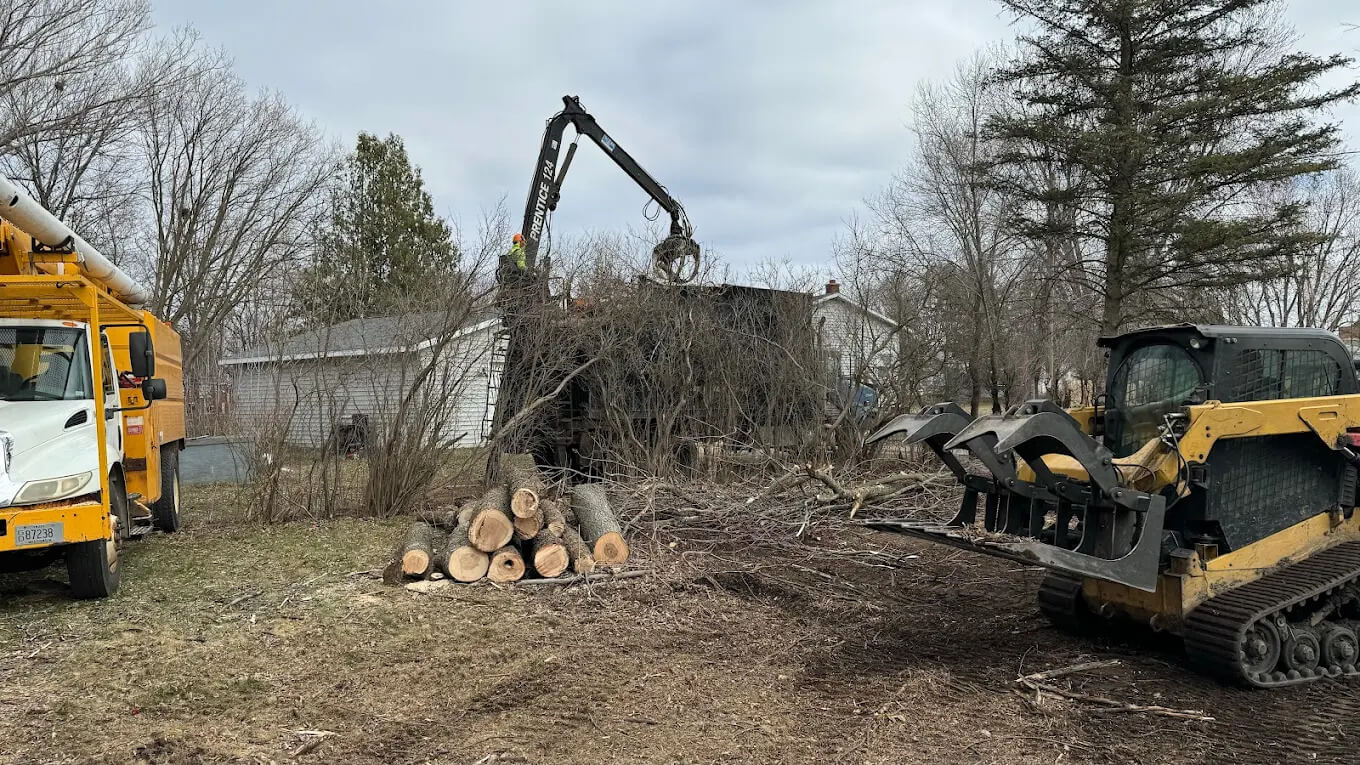
A fallen tree can turn a normal day upside down. One minute everything looks fine. The next, there’s a tree across your yard, driveway, or even your roof. High winds, snow load, and root damage often play a role. Knowing your next steps makes a stressful moment more manageable.
Tree Sixty Tree Service works with homeowners throughout La Crosse and Monroe Counties after storms hit. We know how quickly small issues can grow. This guide breaks down what to do if your tree falls and how to handle fallen tree removal without adding more risk.
Start with safety and quick checks
A fallen tree can keep moving after it hits the ground. Branches can spring, trunks can roll, and broken tops can hang in other trees. You also have risks you cannot see at first, like live wires, gas lines, and cracked rafters. Take a minute and run through the checks below. They help you choose the next step without guessing.
Check people and pets first
Pause and look around. Is everyone safe? Look for injuries and move everyone inside. Call 911 if anyone is hurt. Keep kids and pets away from windows near the impact area.
Look for power lines and stay back
Far from wires, always keep your distance. Power lines mean danger if you’re too close. Step away when they’re nearby. Distance matters around electrical hazards. Back off whenever cables are visible. Watch for cables hanging from branches or lying below.
Back up thirty feet if you spot one – no closer. After phoning the power crew, have people wait within doors. Only when workers say so should anyone step outside.
Watch for gas smells or hissing
A strange odor or that faint hissing sound means get out fast. Once outside, step far from the building before dialing 911. Never touch light controls or anything with fire nearby.
Decide if this is an emergency right now
Some fallen trees are a cleanup job. Some call for emergency tree removal right now. The difference comes down to what the tree hit, what it is still pressing on, and what else it can damage. Use the situations below to sort it out fast.
The tree fell on your home or garage
Treat this as urgent. Roof damage can spread fast with snow melt or rain. A tree can also load weight onto rafters that were not built for it.
The tree blocks your driveway or the road
Access matters in an emergency. You may need to leave, and first responders may need to reach you. A blocked driveway also puts you at risk if another storm cell hits.
The tree is tangled with wires or leaning on something
A tree that hangs in another tree can drop later. A trunk that rests on a fence or shed can shift with one cut. Call for emergency tree removal and keep clear.
Do not start cutting right away
A chainsaw feels like the fastest fix. Most injuries happen at this stage, and the tree often looks calmer than it is. Fallen tree removal involves tension, weight, and unpredictable movement. The points below explain why waiting saves you pain and money.
Branches can snap back without warning
A limb under tension acts like a spring. One cut can make it whip. That can break bones in a split second.
The trunk can roll or twist
A trunk can sit on uneven ground. Once you cut a support limb, it can roll. That roll can crush a foot, a leg, or a tool.
You can cause more damage to your home
A tree that rests on a roof may hold parts of the roof in place. Cutting the wrong section can drop weight onto weak spots. That turns a small hole into a bigger collapse.
Protect the area and document what happened
After the safety checks, your next goal is to stop more damage. You also want clear records for your insurance claim. This step feels boring, but it saves time later and it helps you avoid fights over coverage.
Keep people away and mark the hazard
Put a chair, cone, or trash can near the danger zone. Close off the area with what you have. Tell neighbors to stay back if the tree crosses property lines.
Take photos before anything gets moved
Shoot wide photos from several angles. Then take close photos of impact points and broken parts. Get pictures of any visible damage to shingles, gutters, siding, fences, or vehicles.
Call your insurance company and share basic facts
Tell them a tree fell and list what it hit. Ask what they need from you for the claim. Write down the claim number and the name of the person you spoke with.
Know who is responsible when a tree fell on property
This part causes a lot of stress. People worry about blame, or they assume the neighbor must pay. The rules often come down to where the tree landed and whether the tree was known to be dead. You can still act fast without arguing about it on day one.
If your tree falls onto your yard
You handle cleanup on your property. Insurance may cover damage to structures. Fallen wood in the yard often falls under routine cleanup costs.
If your tree falls onto a neighbor’s yard
Your neighbor handles what lands on their side. They may use their insurance for damage. You can still coordinate removal so the job stays safe and clean.
If a dead tree was ignored for a long time
A documented dead tree can change how costs get handled. Photos, texts, and past estimates can matter. Keep your records and let the insurance companies sort it out.
What a professional crew does during emergency tree removal
A good crew does not show up and start cutting. They plan the order of cuts and they control where the weight goes. They also manage safety zones and keep debris from spreading across the yard. Here is what you can expect when Tree Sixty Tree Service handles emergency tree removal in Southwest Wisconsin.
First comes a safety and stability check
We look for wires, tension points, and pressure on structures. We check nearby trees for broken hangers. Then we pick the safest cut plan.
We remove the tree in sections
We cut the tree down in controlled pieces. We lower weight off roofs and fences in a safe order. That reduces the chance of a sudden shift.
Cleanup is part of the job
We haul away debris and leave the site tidy. You should not be stuck dragging brush piles for weeks. Tree Sixty includes complete cleanup with every service.
What to do after the tree is gone
After the tree comes down, your pulse slows. Now those ruts show up – dents here, torn grass there. Skip a step now, fix it again next week. Walk through these points to finish clean.
Check the roof, gutters, and siding again
Look for loose shingles and bent gutters. Check attic spaces for wet spots. Call a roofer fast if you see water stains.
Think about stump grinding
A stump can trip people and it can wreck mower blades. Stump grinding also helps you reclaim the space. It can be done after removal once the site is stable.
Look at nearby trees for warning signs
One fall can point to root issues across the yard. Wet ground and rot can affect other trees too. A quick look now can prevent the next call.
Need help fast after a tree falls?
A fallen tree can shut down your whole day. It can also turn into bigger damage if it sits on a roof or blocks access. Tree Sixty Tree Service answers calls 24/7 across La Crosse County, Monroe County, and The Driftless Area. Call us for emergency tree removal and fallen tree removal. We show up, remove the hazard, and clean up the mess.

