

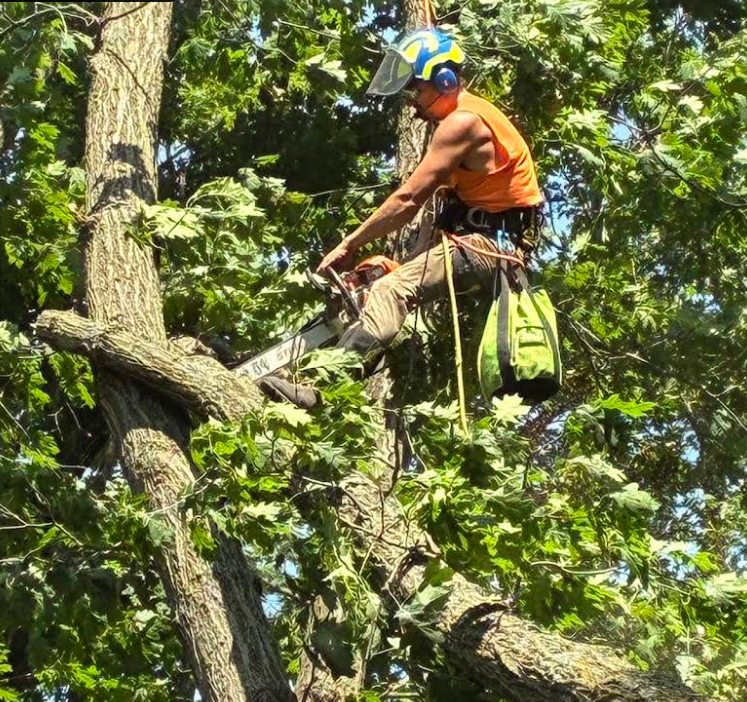
Winter has a way of making trees fade into the background especially across Southwest Wisconsin where snow settles in and everything looks still for a while, but this is exactly when a tree inspection in winter makes the most sense because once the leaves are gone the tree stops hiding its problems. You can see what is really going on. And that matters.
Most people assume tree inspections are a spring or summer thing. Growth season. Green leaves. Easy access. But winter changes the equation in a good way, especially for homeowners and property managers in La Crosse County, Monroe County, and throughout The Driftless Area where weather patterns test trees year after year.
What a Tree Inspection in Winter Actually Reveals
When trees enter dormancy their structure becomes honest. Branches stop blending together. Trunks show their lines. Weak points step forward without being asked.
Dormant trees show structure instead of foliage
Without leaves blocking the view it becomes easier to spot uneven growth patterns, crossing limbs, and branch unions that never formed correctly. These are the spots where failure often starts. Winter light helps too. Everything sharpens.
Cracks and splits stand out in cold weather
Cold temperatures expand existing weaknesses. Small fractures in trunks or large limbs often show clearly once freeze and thaw cycles begin. These cracks may not look dramatic yet but they explain future problems if ignored.
Deadwood becomes obvious without leaves
Dead branches do not blend in during winter. They sit there dry and brittle and waiting for the next wind or snowfall. A professional tree inspection in winter catches these hazards early before gravity does the job instead.
Winter Storms Change Tree Safety Fast
Snow and ice add weight. Wind adds movement. Trees that looked stable in October can behave very differently by January.
Snow load exposes weak limbs
Heavy snow piles onto horizontal branches and creates pressure points. Some limbs are built for that weight. Others are not. Winter inspections look for sagging and stress that signal future breakage.
Ice buildup stresses trunks and branch joints
Ice does not fall off quickly. It lingers. That slow sustained weight can pull at joints and seams that already had flaws, especially on mature trees common throughout Southwest Wisconsin.
Wind after snowfall creates compound risk
When wind hits a snow loaded tree it multiplies stress. That combination causes many winter failures that surprise property owners because nothing seemed wrong the day before.
Why Waiting Until Spring Can Cost More
It is easy to think waiting saves money. Often it does not.
Small winter damage rarely stays small
Cracks widen. Roots shift slightly during freeze thaw cycles. What starts as a manageable issue can turn into structural failure once spring growth adds weight and moisture.
Emergency calls cost more than planned inspections
Calling for help after a limb falls on a driveway or building usually means urgency. Planned inspections are calmer. They allow time to make smart decisions.
Spring demand limits scheduling flexibility
As soon as snow melts phones ring. Everyone wants service at once. Winter inspections give property owners more control over timing and planning.
Tree Inspection in Winter for Homes and Businesses
Residential and commercial properties share risks but the impact is different.
Residential inspections focus on safety and peace of mind
Homes have driveways, play areas, power lines, and roofs. Winter inspections focus on keeping those spaces safe through the hardest months.
Commercial properties face different winter liabilities
Parking lots. Walkways. Customer access points. A falling branch creates more than inconvenience. It creates responsibility.
Shared risks but different consequences
The inspection process adapts to the property because no two situations are the same. That flexibility matters.
What a Local Winter Tree Inspection Looks Like in Southwest Wisconsin
Local conditions change everything.
Driftless Area terrain changes winter tree behavior
Hillsides, shallow soils, and exposed ridges all influence how trees respond to snow and wind. Experience here matters.
Access matters when snow is on the ground
A local crew understands winter access challenges and safe movement around properties without causing damage.
Why local experience beats generic advice
Tree care is not one size fits all. Local knowledge fills the gaps that generic guidance misses. Learn more about our locally owned tree service in Norwalk here: https://treesixtytree.com//about
When to Schedule a Winter Tree Inspection
Timing does not need to feel rushed.
Early winter versus mid season inspections
Early winter focuses on structure. Mid season focuses on storm response and developing stress.
After storms is often the right moment
Snow can hide damage temporarily. Once it settles, inspections reveal what shifted underneath.
Before spring growth begins
Winter inspections set the stage for safer growth when trees wake up. For general tree safety guidance during winter conditions, the International Society of Arboriculture provides useful public resources.
A Calm Next Step for Property Owners
A tree inspection in winter is not about creating urgency. It is about clarity. Knowing what is solid. Knowing what needs attention. And knowing what can wait.
Tree Sixty Tree Service is locally owned and operated in Norwalk and serves La Crosse County, Monroe County, and surrounding areas of Southwest Wisconsin. Whether you are planning ahead or responding to winter weather, our courteous team is available and ready to help. Call (608) 633-6546 to schedule your free quote and get answers that fit your property.

