

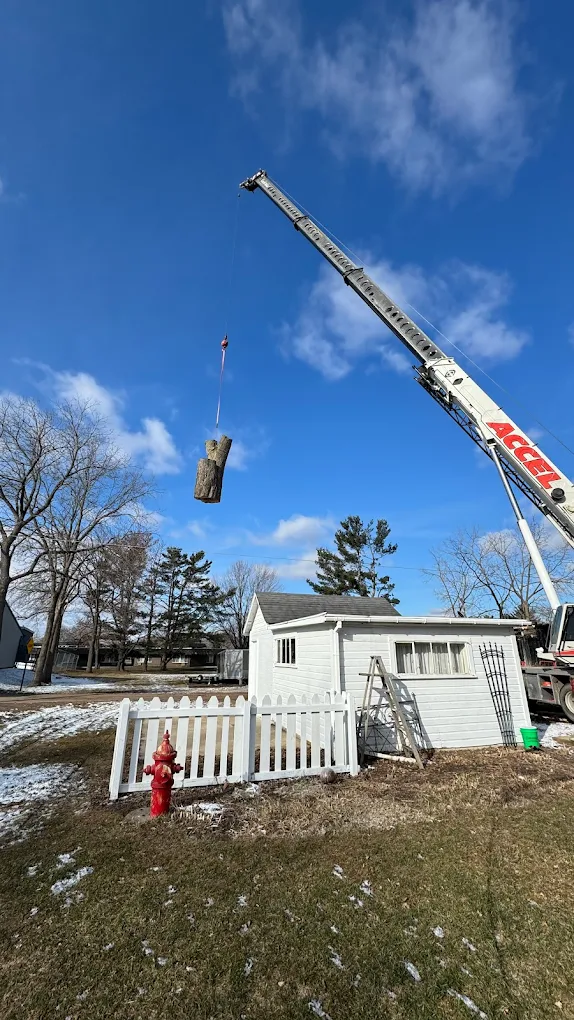
Under the summer sun, shade spills across the lawn where branches stretch wide. A home sits nestled behind leaves, creating a space that feels sheltered, not watched. Years pass. Wood grows thick, and roots creep toward foundations, silent as breath. What once protected now leans under weight it didn’t have before. Signs hide in plain sight cracks, tilting, stiffness when the wind moves through nearby trees.
One reason to act quickly? Hidden damage can spread beneath healthy bark. Spotting trouble early helps avoid bigger problems later. Sometimes a lean reveals more than dead branches ever could. The team at Tree Sixty Tree Service recognizes these patterns after years of helping property owners in Southwest Wisconsin. What looks stable might not hold through storm season. Warning signs appear in unexpected ways peeling bark, sudden thinning, mushrooms near the roots. Each clue adds context many people overlook. Acting before cracks widen keeps problems manageable. They’ve handled situations like these many times each year.
The Tree Starts Leaning in a New Direction
A tree does not need to stand perfectly straight to stay healthy. Some trees grow at an angle for years and hold strong. The trouble starts once that lean changes. A new lean often points to root trouble, weak soil, or storm damage.
Take a close look at the base. You may see cracked soil, raised ground, or roots pulling up on one side. Those signs tell you the tree has started to shift, and that shift can speed up after heavy rain or strong wind.
A sudden lean near a house, garage, driveway, or fence deserves quick attention. The same goes for a tree close to power lines. In that case, waiting gives the tree more time to fail.
This is one of the first reasons homeowners search for tree removal near me. They know something looks wrong, and they want a clear answer before the next storm hits. Tree Sixty gives free quotes, and homeowners can upload photos before the visit, so the first step feels simple and low pressure.
Large Dead Branches Keep Falling
A few dead twigs high in the canopy are common. Large dead limbs are different. They put people, pets, cars, and roofs at risk, and they often signal a deeper problem inside the tree.
A tree may drop one heavy limb after a storm. That can happen. But repeated limb loss tells a different story. It often means parts of the tree are dying back, and the structure is losing strength.
Look up into the canopy. Dead branches usually stand out. They have no leaves in season, the bark looks dry, and the wood snaps with little effort. The crown may look thin on one side or sparse across the top.
This is one of the plainest signs you need tree removal, especially once dead limbs show up across the whole tree. In some cases, trimming solves the problem. In others, the damage runs too deep, so removal becomes the safer call. A local crew can tell the difference and handle the cleanup at the same time. That matters to many homeowners, and it is one reason Tree Sixty stands out in The Driftless Area.
The Trunk Has Deep Cracks or Hollow Spots
The trunk carries the full load of the tree. Once that main support weakens, the risk goes up fast. A tree can still leaf out and look alive from the street, but the inside may be breaking down.
Deep vertical cracks deserve a close look. Long splits through the trunk matter even more. Hollow sections, large wounds, and missing bark can point to decay in the heartwood, and that weakens the whole tree.
Homeowners often feel stuck here. The tree still looks green, so they wait. A delay like that can push what was once under control straight into crisis mode when winter storms hit again.
Here’s something worth noting about the timing of tree removal: even if a trunk has a cavity, it may still stand without immediate danger but leaving it unchecked isn’t safe either.
The same goes for a trunk with a fresh split after a storm. Tree Sixty handles both routine removals and urgent storm work, so homeowners do not need to sort out the whole problem on their own.
The Roots Show Signs of Failure
Most root problems stay hidden until the tree starts showing stress above ground. That is part of what makes them so serious. A tree can look decent from a distance and still have poor support under the soil.
Start at ground level. Mushrooms near the base, soft wood around exposed roots, raised soil, and sudden movement in the root flare can all point to decay or root loss. Construction damage can cause the same problem. A trench, patio project, or driveway repair can cut roots that kept the tree stable for years.
What does that mean for the homeowner? It means the tree may not hold in wet ground or high wind. That risk gets worse once the tree stands near a home, shed, or play area.
Root failure is one of the clearest signs you need tree removal. It can be hard to judge from the yard, so a trained local crew brings real value here. Tree Sixty serves homeowners across La Crosse County, Monroe County, and nearby towns, and their team knows how Southwest Wisconsin weather can push a weakened tree past its limit.
The Tree Is Dying From the Top Down
A dying tree often sends signals for months before it fully fails. The canopy thins out. Leaves stay small. Bark peels away in large sections. Branch tips die back, and more bare wood shows up each season.
Dead or dying trees do not regain strength.Brittleness increases with age. When storms hit, limbs can break without warning, bark may crack from lack of moisture, and removal becomes riskier the longer it is delayed.
Up high, the tree often shows signs first. When spring arrives with few leaves, that’s a warning. Branches that remain bare during warmer months add to it. So do lifeless patches scattered throughout the canopy.
Some species recover from stress. Many do not.
This is usually the point where homeowners ask when to remove a tree instead of asking whether the tree has a problem. That shift makes sense. A dead tree near a home is not just an eyesore. It is a hazard. Tree Sixty helps homeowners make that call with fair pricing, no obligation, and complete cleanup after the work is done.
The Tree Has Outgrown the Space
Not every risky tree is dead or damaged. Some trees simply grow too large for the space around them. Roots spread into hardscape areas. Branches scrape the roof. Limbs hang over a driveway or block sight lines near the road.
That problem often starts small. A branch touches the gutter. A root lifts part of the walkway. Then the tree keeps growing, and the repairs start adding up. Repeated trimming may buy time, but it does not fix the long-term issue.
Trees planted close to houses often create this problem. The same goes for trees near garages, septic areas, retaining walls, and utility lines. A tight space gives a mature tree very little room to grow without conflict.
This is another common reason people search for tree removal near me. They are not dealing with a dead tree. They are dealing with a tree that no longer fits the property. In that case, removal can protect the home and reduce future costs. Tree Sixty gives homeowners a simple path forward with free quotes, courteous service, and work that leaves the yard clean when the job is done.
Know the Signs Before the Tree Forces the Decision
Something off about a tree? It might lean now when it didn’t before. Branches drop without warning. Cracks run down the trunk like broken seams. Roots push through soil where they shouldn’t. Leaves grow sparse near the crown patchy and weak. Maybe the whole thing stands too close to the house. Each sign whispers that trouble is building slowly.
Notice them early enough, and you still get to decide what happens next when to act, how much to spend, whether to keep it safe or cut your losses. Wait too long, though, and your options start shrinking fast.
Out of Norwalk comes a team that knows trees they handle everything themselves, right here. Serving homes in Southwest Wisconsin and throughout the Driftless Area, their work stays grounded but climbs high when needed. When storms hit, someone shows up fast limbs down, branches cleared without delay. Cutting back thick growth happens just as often as shaping smaller limbs overhead. Stumps vanish after grinding, always leaving yards clean afterward. Size never slows them down tall oaks and backyard shrubs receive the same level of care. Reach out by phone at (608) 633-6546 for no-cost pricing. Snap photos, then send them through the site whenever you’re ready to begin.

